• © Materials Chemistry Consortium
  • Cookies
  • Website Credits
logo for Materials Chemistry Consortium
  • Home
  • News
  • Publications
  • Events
  • Join
  • Documents
  • Case Studies
  • Committee
  • Contact
  • Home
  • News
  • Publications
  • Events
  • Join
  • Documents
  • Case Studies
  • Committee
  • Contact
Using Machine Learning to uncover the Unique Properties of Nanoconfined Water

Using Machine Learning to uncover the Unique Properties of Nanoconfined Water

by Thomas Durrant | May 30, 2025 | 2025, MCC Case Study

Water – the molecule of life – is an intriguing substance to study. The properties of water, already unique at the macroscale, become even more perplexing when confined to nanoscale regimes. At these reduced length scales, water can exhibit anomalously low dielectric...
Multiscale Modelling of Electronic and Defect Properties of Cerium Oxides

Multiscale Modelling of Electronic and Defect Properties of Cerium Oxides

by Thomas Durrant | Apr 22, 2025 | 2025, MCC Case Study

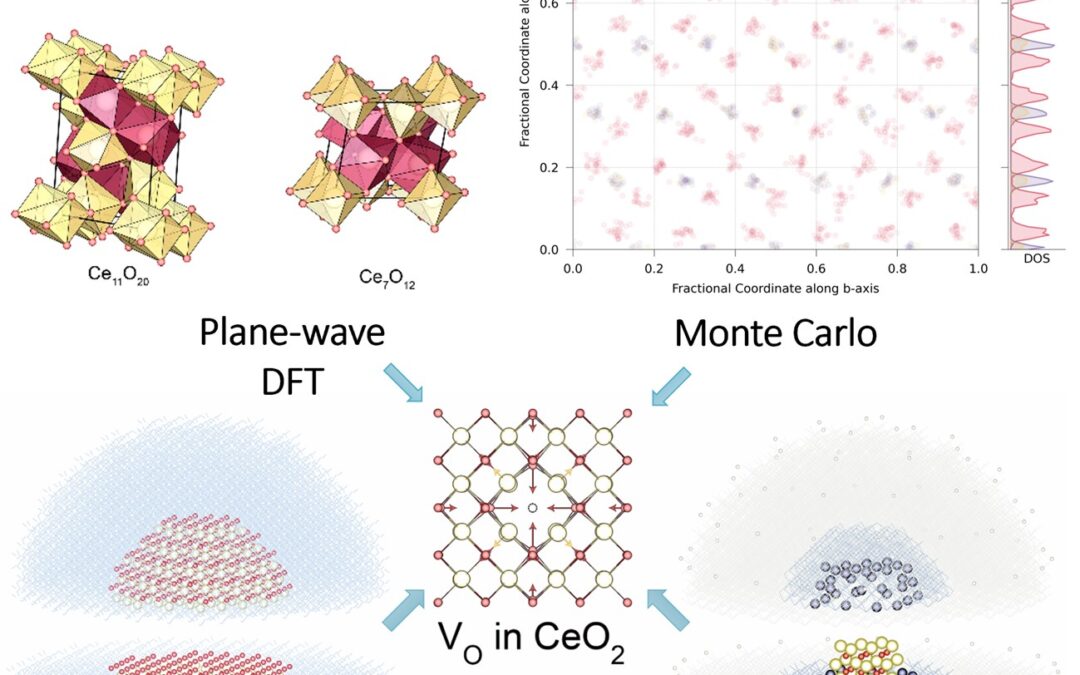
A new theoretical framework was developed to investigate the electronic and defect properties of ceria (CeO2) by integrating shell-model interatomic potentials, hybrid quantum mechanics/molecular mechanics (QM/MM) embedded-cluster approach, density functional theory...
Mechanism of dielectric breakdown in oxide films

Mechanism of dielectric breakdown in oxide films

by Thomas Durrant | Apr 22, 2025 | 2025, MCC Case Study

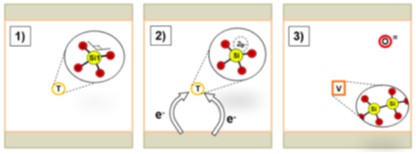
Gate dielectrics breakdown (BD) is one of the most challenging areas in the field of semiconductor device reliability. Despite massive research efforts conducted for over 50 years by industry and academia, a consensus has not yet been reached on the microscopic nature...
Improving Pd-based alloy catalysts for CO2 hydrogenation with Density Functional Theory and Artificial Intelligence

Improving Pd-based alloy catalysts for CO2 hydrogenation with Density Functional Theory and Artificial Intelligence

by Thomas Durrant | Apr 22, 2025 | 2025, MCC Case Study

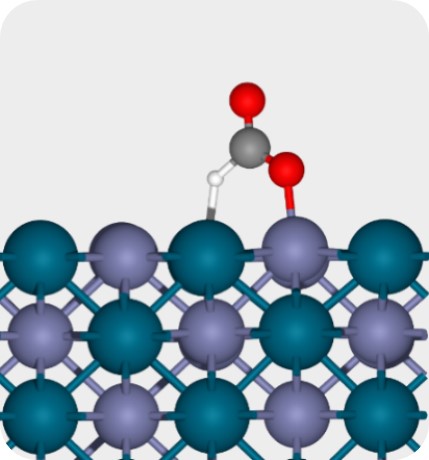
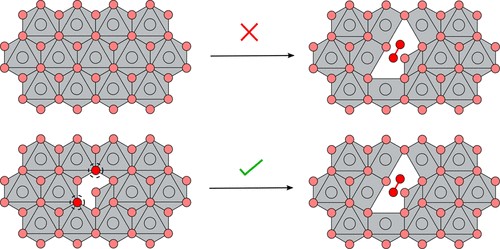
The global annual production of methanol is ~100 million tonnes, predominately from oil-derived sources using heterogeneous catalysts. Synthesis of methanol from CO2, using sustainable hydrogen, is a promising strategy for clean methanol that has reduced carbon...
Accelerated Materials Discovery for Solid State Hydrogen Storage Applications Using Machine Learning and Density Functional Theory Simulations

Accelerated Materials Discovery for Solid State Hydrogen Storage Applications Using Machine Learning and Density Functional Theory Simulations

by Thomas Durrant | Apr 22, 2025 | 2025, MCC Case Study

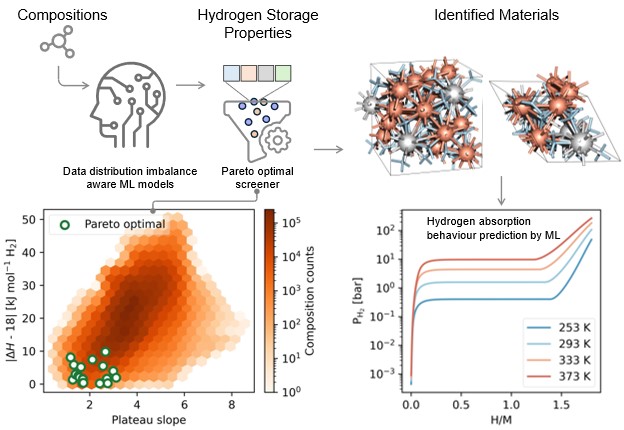
We demonstrate how the integration of machine learning (ML) and density functional theory (DFT) approaches accelerates the discovery of advanced intermetallic alloys for solid-state hydrogen storage applications. By developing data-distribution-imbalance-aware ML...
Defect chemistry of the layered lithium-ion cathode material LiNiO₂

Defect chemistry of the layered lithium-ion cathode material LiNiO₂

by Thomas Durrant | Apr 22, 2025 | 2025, MCC Case Study

The layered lithium-ion cathode material LiNiO₂ (LNO) has attracted significant attention due to its high energy density, yet challenges related to structural stability and degradation during cycling have hindered its commercial adoption. Materials Chemistry...

« Older Entries
logo for Materials Chemistry Consortium

The HEC Materials Chemistry Consortium is funded by EPSRC (EP/R029431 and EP/X035859).

Internal website for MCC members

  • © Materials Chemistry Consortium
  • Cookies
  • Website Credits