• © Materials Chemistry Consortium
  • Cookies
  • Website Credits
logo for Materials Chemistry Consortium
  • Home
  • News
  • Publications
  • Events
  • Join
  • Documents
  • Case Studies
  • Committee
  • Contact
  • Home
  • News
  • Publications
  • Events
  • Join
  • Documents
  • Case Studies
  • Committee
  • Contact
Accelerated Materials Discovery for Solid State Hydrogen Storage Applications Using Machine Learning and Density Functional Theory Simulations

Accelerated Materials Discovery for Solid State Hydrogen Storage Applications Using Machine Learning and Density Functional Theory Simulations

by Thomas Durrant | Apr 22, 2025 | 2025, MCC Case Study

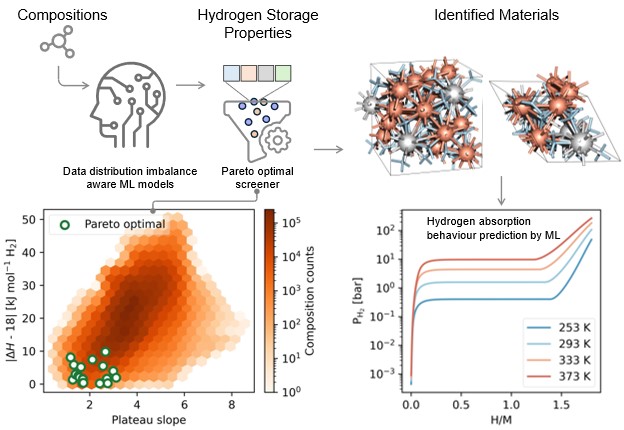
We demonstrate how the integration of machine learning (ML) and density functional theory (DFT) approaches accelerates the discovery of advanced intermetallic alloys for solid-state hydrogen storage applications. By developing data-distribution-imbalance-aware ML...
Defect chemistry of the layered lithium-ion cathode material LiNiO₂

Defect chemistry of the layered lithium-ion cathode material LiNiO₂

by Thomas Durrant | Apr 22, 2025 | 2025, MCC Case Study

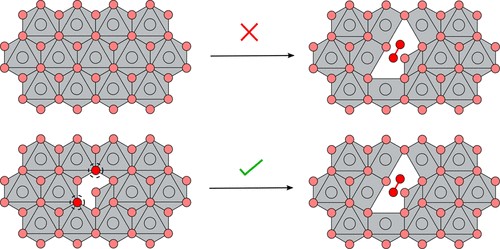
The layered lithium-ion cathode material LiNiO₂ (LNO) has attracted significant attention due to its high energy density, yet challenges related to structural stability and degradation during cycling have hindered its commercial adoption. Materials Chemistry...
Simulation-led discovery of porous non-metal organic frameworks for energy applications

Simulation-led discovery of porous non-metal organic frameworks for energy applications

by Thomas Durrant | Apr 22, 2025 | 2025, MCC Case Study

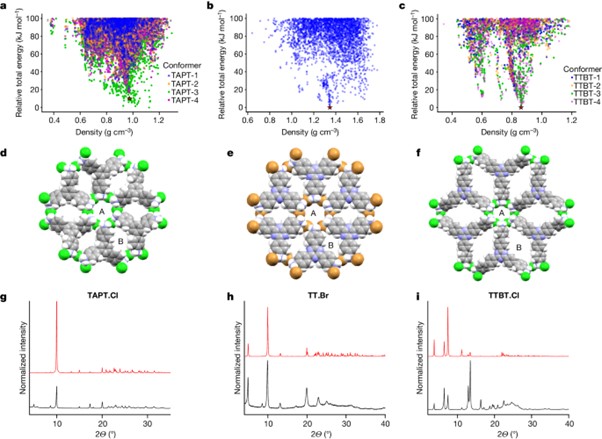
Designing crystalline solids with specific functionalities is a challenge due to the complexity of predicting how molecules will assemble in the solid state. Traditional methods for discovering new functional materials rely heavily on trial and error, which is...
Thermoelectric transport in molecular crystals driven by gradients of thermal electronic disorder

Thermoelectric transport in molecular crystals driven by gradients of thermal electronic disorder

by Thomas Durrant | Apr 22, 2025 | 2025, MCC Case Study

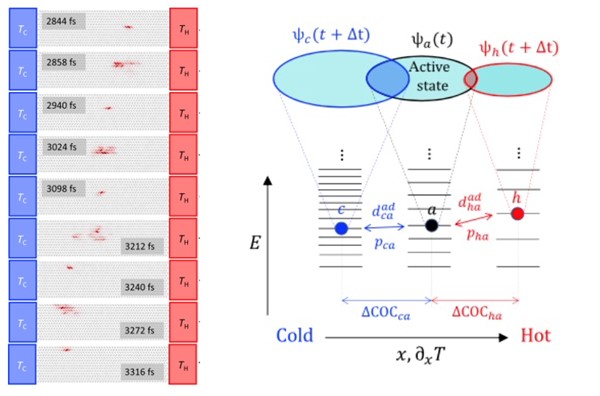
In this work, MCC researchers develop a quantum dynamical simulation approach revealing in atomistic detail how the charge carrier wavefunction moves along a temperature gradient in an organic molecular crystal resulting in thermoelectric charge transport....
Machine learning the electric field response of condensed phase systems using perturbed neural network potentials

Machine learning the electric field response of condensed phase systems using perturbed neural network potentials

by Thomas Durrant | Apr 22, 2025 | 2025, MCC Case Study

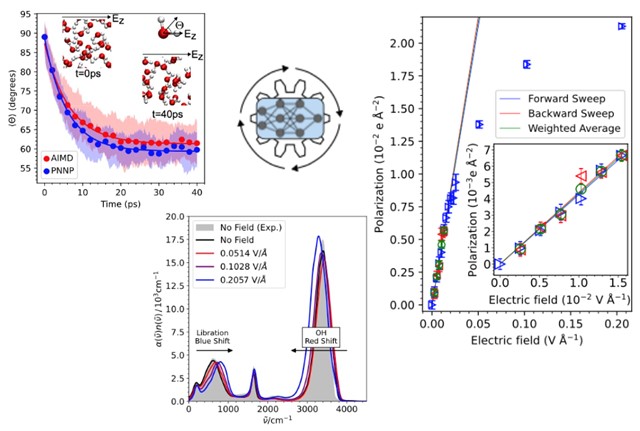
In this work, MCC researchers present a machine learning method that enables molecular dynamics simulations under finite electric fields at length and time scales previously unattainable with traditional first-principles approaches. Using ARCHER2 they demonstrate its...

« Older Entries
Next Entries »
logo for Materials Chemistry Consortium

The HEC Materials Chemistry Consortium is funded by EPSRC (EP/R029431 and EP/X035859).

Internal website for MCC members

  • © Materials Chemistry Consortium
  • Cookies
  • Website Credits